Women, Silence, and Suicide in Pakistan


Trigger warning: This essay discusses suicide, with stories of young women in Pakistan who died by suicide. Please take care while reading.
In Pakistan, suicide is spoken of in whispers. “She drank something.” “He hanged himself.” More often than not: “We don’t talk about it, it brings dishonor.”
But silence kills.
September is Suicide Prevention Month. Around the world, campaigns light up timelines with slogans and hotlines. But here, our silence is heavier. Because in Pakistan, suicide is not only about despair. It is about control, patriarchy, and the suffocating weight of honor.
Until December 2022, attempting suicide in Pakistan was a crime. Imagine reaching your lowest point, trying to end your life, surviving, and then being threatened with jail under Section 325 of the Penal Code.
A paper on the Decriminalisation of Suicide in Pakistan explains the damage this law caused: families hid survivors, avoided hospitals, and suicides went unreported. The state criminalized pain, instead of listening to it. Even now, even after repeal, stigma keeps deaths hidden. The WHO puts Pakistan’s suicide rate at 7.5 per 100,000, but researchers insist it is far higher.
Stories that shouldn’t be forgotten
Research by Farooq Ahmed and colleagues (2024) in Southern Punjab uncovered stories that stay with me.
A young woman, forced into an exchange marriage with a man in his seventies, begged her parents: “Please free me, or I will take my life.” No one listened. One day, she swallowed kala pathar, a cheap black hair dye, and died.
Another, just 18, endured daily humiliation by her sister-in-law. She mixed kala pathar into juice and ended her life.
A 19-year-old, betrayed by her boyfriend, hanged herself.
Different stories, the same thread: disempowerment. These women weren’t allowed to choose their futures, their partners, sometimes not even their words. Suicide became the only act of agency left to them.
Is that “just depression”? Or is it patriarchy?
When honor outweighs life
Marriage is often described as a shield for women in Pakistan. But for many, it becomes a prison.
One mother told researchers: “Her future was decided without her consent. Soon after marriage, disputes erupted. She thought it was better to end her life.”
Another girl, who ran away with her lover, returned home only to hear her parents say: “You buried our honor. We wish you were buried under the earth.” She killed herself days later.
When family honor outweighs a daughter’s life, what message do we send to the next generation of women?
The loneliness of mothers
Another study, by Gul Saeed and colleagues (2024), captured the voices of mothers in rural Rawalpindi who had attempted suicide.
One described her in-laws’ home as nothing more than a place of servitude. Another confessed: “My patience, my sabr, had ended.”
And yet, what kept many of them alive was motherhood. Even in despair, they clung to their children. “I can’t leave them,” they said. The tension between wanting freedom from pain and being bound by duty is uniquely heavy in our context, weighed down by faith, afterlife, and family expectations.
South Asia’s crisis
Neha Jain, in her research on South Asia, reminds us that women here carry a different kind of burden. Globally, suicide prevention often centers men, because in the West, men are more likely to die by suicide. But in South Asia, it is women.
And when women’s suicides are ignored, so are the structures that kill them: forced marriages, domestic violence, honor cultures, poverty.
Chitral: behind the beauty, unbearable silence
A 2025 study by Jafaryad Hussain, Sahil Sajjad, and Kausar Hussain investigated suicide among married women in Chitral. Between 2013 and 2019, there were 176 reported suicides in this mountain district. 58% of the victims were women, most under 30.
The findings were devastating: the leading factor was domestic violence, shaped by personal, family, community, and societal pressures.
One young woman, infertile, was told by her husband: conceive within a year or he would remarry. Her mother-in-law mocked her daily. In despair, she ended her life.
Another discovered her husband’s affair. When she confronted him, he beat her with sticks until they broke. She killed herself soon after.
Another, trapped in a joint family of 10 people, begged for a separate home. Her husband refused. Overwhelmed, she took her life.
In interviews, even fathers and brothers defended this violence: “Running the home, cooking, cleaning, these are women’s duties. If they don’t fulfill them, they should be punished.”
Do you see the pattern? These women were not weak. They were cornered. Every structure, family, community, state told them they had no escape. Death became the only door left open.
And still, there are no women’s police stations in Chitral. Families discourage reporting abuse to male officers, fearing “shame.” So women remain trapped.
Beyond illness, into structures
Again, I come back to this: how often do we reduce these deaths to “mental illness” when they are clearly about power?
Yes, therapy matters. Yes, psychiatry matters. But prevention in Pakistan also means banning kala pathar, outlawing forced marriages, creating shelters, training police, and breaking honor-based silence.
Sometimes I think: how many lives could have been saved if just one person had listened? If one parent had said, “Your voice matters.” If one law had offered protection instead of punishment.
What now?
The truth is, suicide prevention in Pakistan will never be solved by awareness campaigns alone. It requires structural change.
Ban lethal substances like kala pathar.
Enforce laws against forced and child marriages.
Build safe shelters and hotlines for women.
Create a national suicide prevention strategy that addresses culture and gender, not just psychiatry.
And most simply: listen. Don’t dismiss despair. Sometimes, being heard is the first step toward healing.
Carrying these stories forward
I think often of one young woman, remembered by her teacher. She had lost her lover to illness, her brothers refused to support her, and she said: “I have no reason to live. I want to die.” Days later, she hanged herself.
I think of her, and the countless others whose names we never learn.
And I wonder: how many lives could be saved if women in Pakistan were given more choices, more respect, more support?
Because suicide prevention is not just about saving lives at the brink. It’s about dismantling the systems that make life unbearable in the first place.
If you or someone you love is struggling with suicidal thoughts, please reach out to someone you trust. In Pakistan, resources are limited, but you are not alone. Speak to a friend, a counselor, or call Umang Pakistan at 0311-7786264.


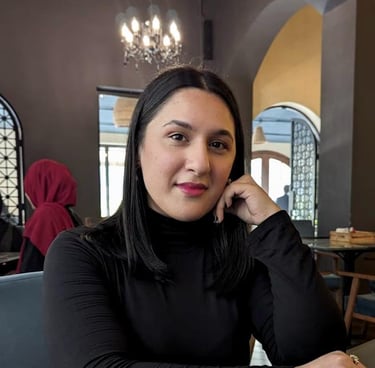
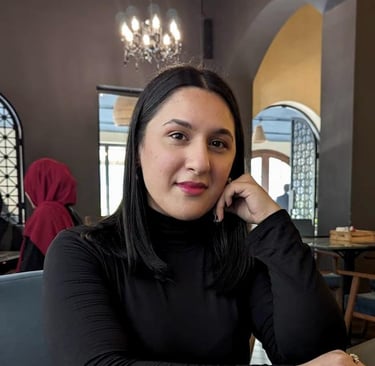
Sarosh Ibrahim
Researcher
September 30, 2025
© 2025. All rights reserved.
A platform exploring body politics, culture, and identity in Pakistan and beyond.