
Why Classrooms Are A Refuge For Girls In Pakistan
Education, violence, and the quiet theft of girlhood
Pakistan’s education crisis reveals a form of violence that is often invisible – the quiet, persistent denial of safety, autonomy, and opportunity for millions of girls.
According to UNICEF, 22.8 million children are out of school in the country, most of them girls, with girls from rural areas and lower-income households disproportionately affected. Experts highlight that this denial is not merely a social issue but a form of systemic gendered violence, where cultural norms, household responsibilities, and safety fears combine to limit girls’ access to education.
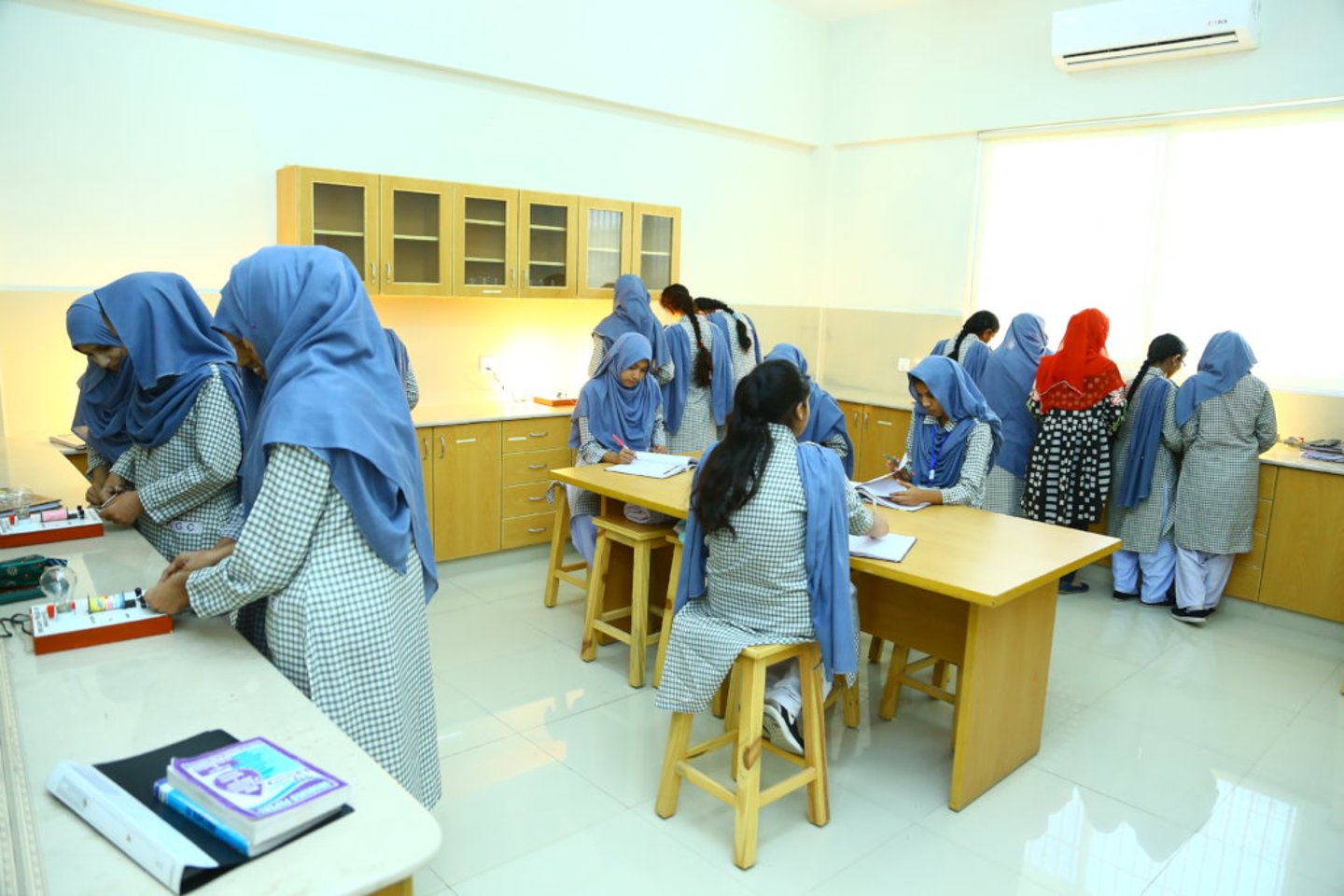
For many girls who do make it into a classroom, school is more than a place of learning, it is the only refuge they have. During the 16 Days of Activism Against Gender-Based Violence, it becomes essential to recognise that violence often takes invisible forms: emotional abandonment, silence, punishment, and the policing of girls’ futures.
“Education is always good, it can never be bad”
For 35-year-old Saira, a quiet house where her parents, both holding notable professional ranks, were busy, distant, and shaped by their own childhood tribulations. Her mother came from a deeply oppressive household. Her father came from a progressive one, yet, even then, Saira remembers hearing people ask him, “Sir, why are you educating your daughters?”
Saira describes her childhood as a complete blur. She says, “I felt like something wrong or bad was happening to me. I could not name it.”
At the age of eight, she began being molested by a cousin. She was never taught the language to describe what was happening. She was never given a safe adult to trust.
“I was parentified,” she tells me. “It was my duty to teach, change the diapers of my siblings.”
Her own trauma was given no space for resolve, ultimately burying her with responsibility. Studies show that over 50% of women survivors of abuse in Pakistan never report it, partly because seeking justice is daunting and social norms stigmatize speaking out.
Saira sought refuge in books and her school. Her teachers sensed the neglect she could not voice. Through a deep, innate sense of justice Saira speaks for many young girls who are deprived of a safe home.
“I had a voice inside me which told me whatever happened to you should not happen to anyone else.” This inner conviction pushed her to stand up against bullies in her classroom.
Research by Human Rights Watch shows that girls who experience neglect or harassment often rely on school as a psychological safe space, yet systemic barriers frequently prevent access.
Saira’s life changed completely after she turned 23. “I was being forced to get married and I was severely depressed.” That became the turning point for Saira to come face to face with her numbness.
“Therapy, to me, felt like the first time someone told me you are important. You have the right to dress up as well.” Her parents loved her, but love could not envelope her in safety and confidence. For Saira, and many girls like her, emotional absence, or generational wounds are inherited without consent.
Saira strongly believes in education as she deeply wishes for one statement to be printed across every billboard in this country: “Education is always good, it can never be bad.”
“I had to prove I am capable of going to college”
Like Saira, Nadia’s childhood was shaped by emotional abandonment, but her fight for education took a different turn. Nadia grew up in Lahore, the largest city of the province of Punjab, in a conservative, middle-class home. Her father was present but emotionally absent, erupting in anger that shaped the entire household. “I have early memories from grade five of consoling my mother,” she recalls. Her childhood, like many girls in Pakistan, was wrapped in premature responsibility.
When she entered adolescence, online spaces became the accidental gateway to freedom she didn’t know she needed. “I had witnessed emotional starvation all my life, not realising the dangers associated with it,” she says.
At 14, grown men began harassing her, men in their late twenties. Her father’s response was to pull her out of school.
“I was the head girl,” she says. “But I stopped going to school.”
Her education continued at home with tutors, but her confidence, friendships, and sense of safety collapsed. “My female friends, they cut me off. I was deemed the slut of the group.”
Years later, she won a scholarship to study abroad. But freedom has its own price. “My mother would say, ‘If I see your passport, I will tear it apart.’”
Today she lives abroad, as an independent woman, but with guilt and fear stitched into her adulthood. “My parents are growing old. I live thousands of miles away.”
She still carries the threat once made by an uncle to shoot her in the head, a memory that haunts her even now.
“Life is much easier abroad,” she says. “That is something every Pakistani woman should experience.”
“I had to fight for every step of my education”
Where Saira and Nadia lost safety within their homes, Fatima’s story shows how extended family systems tighten their grip as girls grow older. For 26-year-old Fatima, who grew up in Murree, the northernmost region of the province of Punjab, Pakistan, her life shifted for the worse after her father passed away when she was in sixth grade. Her grandfather supported the family financially, for which she remains grateful, but the freedom that existed in her father’s presence disappeared.
The real test began after she finished 12th grade.
“We did not live in a joint family system but the majority of our decisions were influenced by the elders of our family. My paternal aunt and her family played a pivotal role.”
Her grandmother called Fatima’s maternal aunt and said the words she still remembers vividly:
“What will she do with this education? She has to ultimately get married one day. Why don’t we save the money for her younger brother’s education instead?”
“That was the moment I decided that I need to fight for this,” she says.
When she was selected for a student exchange program in the US, she found herself again seeking permission from male relatives. “I used to feel so helpless every time I had to reach out to my aunt or someone from my father’s side… ‘Please talk to my grandfather otherwise I won’t get permission’.”
“As a woman, sometimes, the people closest to you are the ones bringing you down. They don’t want you receiving an education or going out of the house unchaperoned. My understanding is, the fear and control they have over you starts diminishing and that bothers them.”
After completing her bachelor’s, her family arranged her marriage, which she agreed to, but what followed was immediate abuse.
“On the first day of the marriage, I said that I am not staying in this marriage.”
Now, half of her father’s family no longer speaks to her.
“At that point in my life, I had made up my mind that whatever they say, I won’t give in to their threats. Even when I was right, I felt guilty.”
Fatima now works at an NGO. “I am grateful that I am working at a place where I am valued… where I could see people achieving their dreams.”
Recently, she worked in Swat. She met girls who reminded her of her younger self. “One girl used to hitch 3–4 rickshaw rides just to reach the main road every day. Her father was against her leaving the house.” Witnessing their persistence reframed her own pain.
“Education is meaningless unless it is supported by good upbringing,” says Dr. Arfa Sayeda Zahra, a Pakistani human rights activist. “Education is just a word; upbringing is the meaning of education and its interpretation.”
What do these stories reveal?
Women in Pakistan do not pay the cost of education in rupees. They pay it in trauma, in silence, in fear, in guilt, and in forfeited childhoods.
For many girls, school becomes the only place where they feel seen, valued, or safe. However, inside their homes, the very spaces where a child should grow with love and security, many girls carry their darkest secrets. A child is punished for being harassed by grown men. A woman’s honour is kept superior over her personal safety and confident upbringing. Parents pull girls out of school instead of confronting predators. Education is tolerated only until it threatens patriarchy.
Daughters carry the emotional labour of the household. Harassment becomes the girl’s fault, never the man’s. Freedom is conditional until a woman leaves the country. These are not isolated incidents. These are patterns.
Women’s education should not be perceived as a threat. If we wish to curate a happy future for the girls and women of Pakistan, we need to start from our homes. Once we start dissociating the concept of shame with a woman’s mobility, we can create safer spaces for women to receive an education, and raise daughters who do not drown themselves in silence to keep the peace in the house alive.
A Clear Message for the 16 Days of Activism
Gender-based violence is not only what happens on the streets, it hides in living rooms, in dining rooms, in family WhatsApp groups, in permissions sought, in passports withheld, in opportunities denied, and in every door closed on a girl’s future. If Pakistan truly wants to combat GBV, we must begin with the freedom to learn.
Like every year, the message must be loud and clear:
“Education is always good, it can never be bad.”
Names changed to protect anonymity.


Sarosh Ibrahim
Researcher
Nov 25, 2025
Photo Courtesy: Global Giving
© 2025. All rights reserved.
A platform exploring body politics, culture, and identity in Pakistan and beyond.