
Why Are All Our Female Leads in Their 20s?
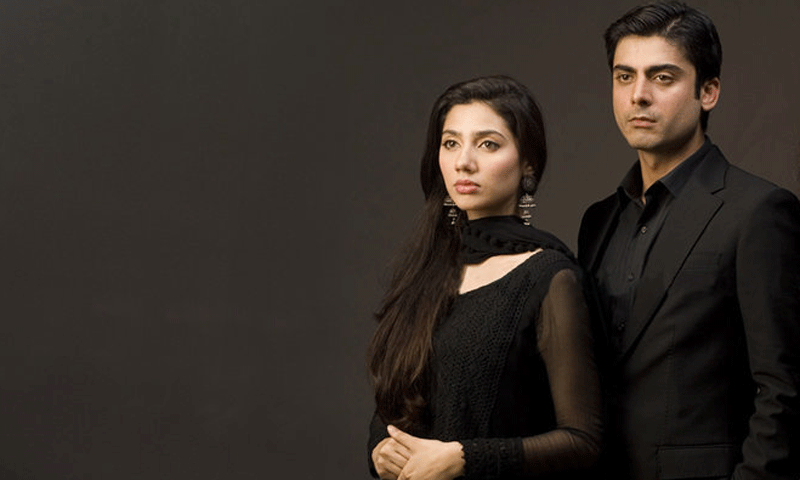
Contemporary Pakistani television dramas present a consistent pattern in the representation of women: the female lead is predominantly fair-skinned, petite, and youthful, while male leads often span decades of age with little change in casting norms. This disparity raises critical questions about gendered beauty standards, ageism, and the construction of femininity on screen.
Historical Context: 1990s Television and Diversity of Roles
In the 1990s and early 2000s, Pakistani dramas showcased a broader spectrum of female roles. Actresses such as Sanam Baloch, Saba Qamar, Neelam Muneer, and Aamina Sheikh embodied varied physical appearances and character types, from quiet, “ideal” daughters to morally ambiguous or sidelined figures. Even within the context of colorism, the narrative space allowed for complexity: wheatish or darker-skinned women were not wholly erased but often positioned in supportive or secondary roles, creating layered storytelling.


Sarosh Ibrahim
Researcher
August 12, 2025
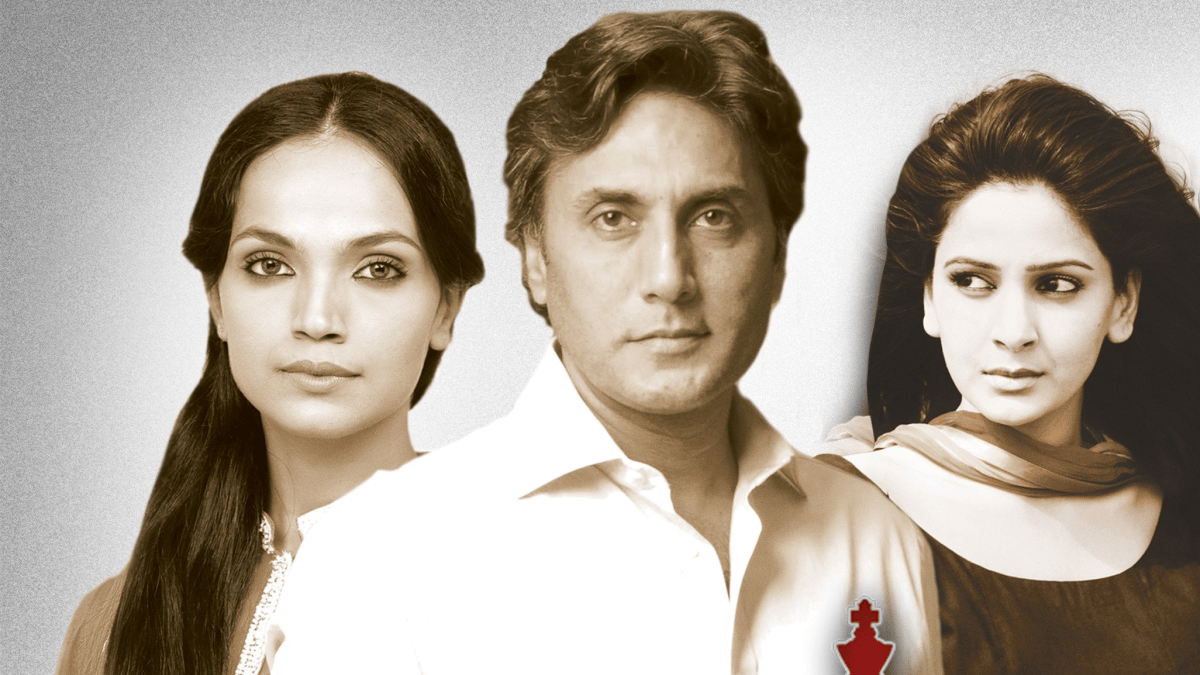
Pakistani Drama MAAT Starring Aamina Sheikh, Adnan Siddiqui, and Saba Qamar
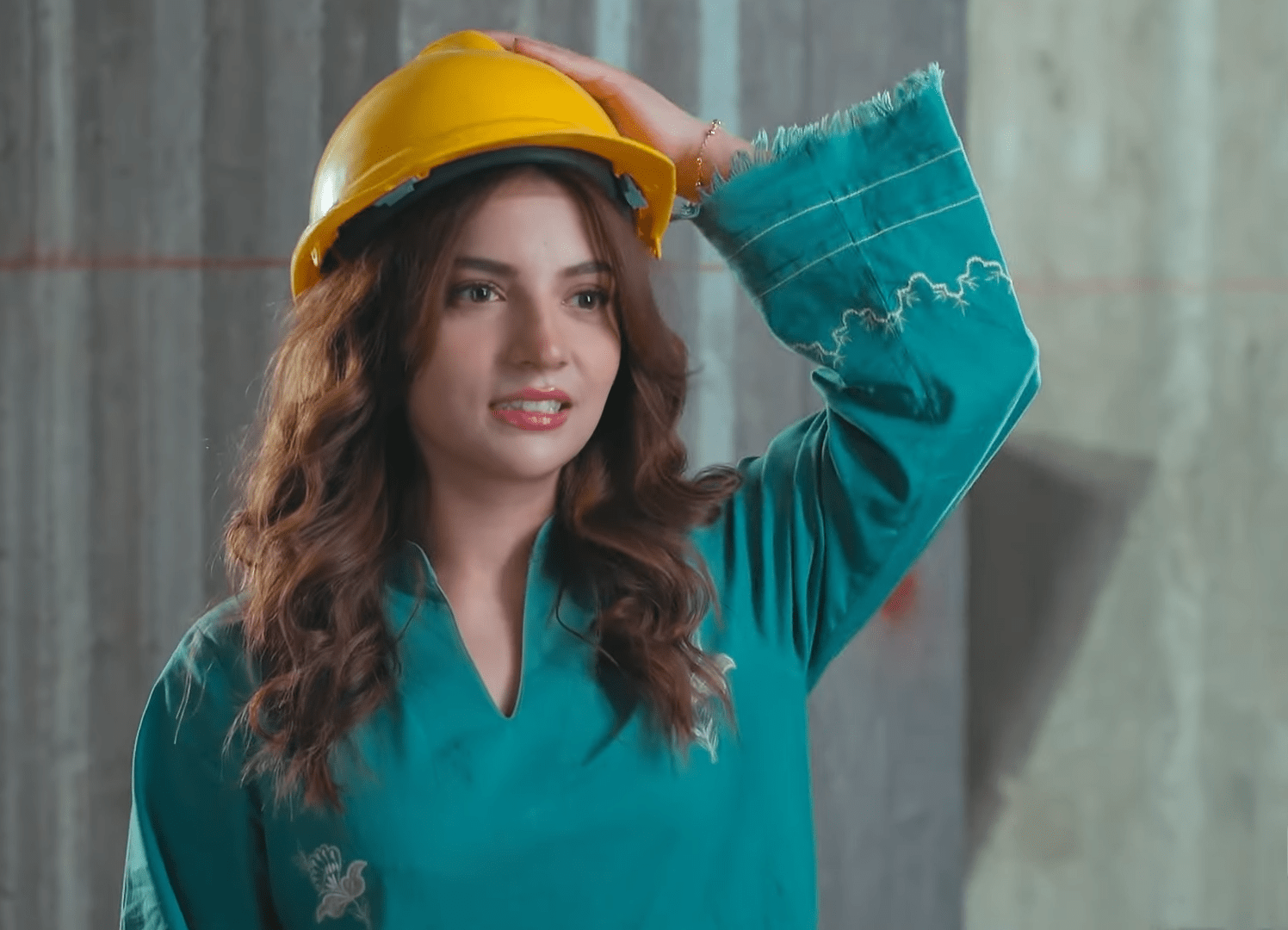
Pakistani Actor Dananeer Mobeen in the Pakistani Drama Meem Se Muhabbat
Male leads, similarly, were closer in age to female counterparts, allowing narratives to maintain relational plausibility. Both genders exhibited professional and personal agency without their bodies serving primarily as symbolic markers of virtue or desirability.
The Shift: Age Gaps, Infantilization, and the Standardization of Female Youth
Over the past decade, a structural shift has emerged. Actresses such as Hania Aamir and Dananeer Mobeen are consistently cast in their early twenties, fulfilling a narrowly defined aesthetic: fair skin, soft facial features, and “innocent” or childlike mannerisms. This selection is frequently juxtaposed against male leads in their forties or fifties, actors such as Danish Taimoor or Faysal Qureshi, maintaining a normalized age asymmetry in romantic pairings.
This pattern reflects both industry logic and audience conditioning. Young female bodies are commodified for visual appeal, often infantilized to emphasize passivity, naivety, and vulnerability. Male characters, conversely, embody authority, control, and experience, reinforcing a structural power imbalance. The narrative consequence is the reduction of female characters to objects of male desire and moral evaluation, rather than autonomous agents.
Reinforcement Through Popularity Metrics and Social Media
Casting decisions are increasingly influenced by online visibility and social media following, amplifying this trend. Young actresses are selected for potential viral appeal rather than narrative necessity, often resulting in repetitive storylines: love-at-first-sight tropes, limited dialogue, and passive characterization. Older actresses are relegated to maternal or antagonistic roles, irrespective of experience, skill, or audience familiarity.
This system privileges visual uniformity over talent or narrative depth, marginalizing diversity in body type, skin tone, and age. Characters are constructed to meet a homogenized aesthetic ideal rather than reflect the socio-cultural heterogeneity of Pakistani women.
Consequences for Gender Norms and Audience Perception
The impact of these representational norms extends beyond television screens. By consistently valorizing youth, fairness, and submissiveness, media reinforces hierarchical standards of femininity that shape societal expectations. Young female viewers internalize these markers as aspirational, linking self-worth to appearance and perceived desirability. Simultaneously, male-dominated narratives perpetuate the acceptability of age gaps and control within relationships.
Contrast this with earlier portrayals in dramas such as Marina Khan’s Sana in Tanhaiyaan or Saba Qamar’s Qandeel in Baaghi, where characters exhibited multidimensionality, agency, and resilience. These portrayals normalized diversity, demonstrating that audience engagement can be driven by narrative complexity rather than visual conformity.
Critical Reflection: Colonial Legacies and the Standardization of Beauty
This pattern is not purely aesthetic; it reflects colonial and patriarchal legacies privileging fair skin, petite frames, and youth as markers of morality, innocence, and value. The repeated infantilization of women and the normalization of age disparities in casting maintain structural inequalities both onscreen and socially.
Conclusion: Towards Inclusive Representation
To challenge these entrenched norms, the industry must critically interrogate its reliance on visual conformity and viral metrics. Female characters should reflect the diversity of lived experiences: across age, skin tone, body type, and personality, and be allowed narrative agency beyond their relationships to men. Inclusive representation can disrupt harmful beauty standards, recalibrate social expectations, and provide young viewers with models of autonomy, resilience, and complexity.
The current trajectory demonstrates that aesthetic choices in media are never neutral; they reproduce cultural hierarchies and gendered power dynamics. Recognizing this is the first step toward reforming storytelling in ways that value women’s lives and experiences in their entirety, rather than as symbolic objects of desire or moral scrutiny.
© 2025. All rights reserved.


A platform exploring body politics, culture, and identity in Pakistan and beyond.