What Really Happens to a Woman’s Body After 30
Mother, Mama, Mom — if you’re reading this...
This is for you, and for all the mothers, women in their 40s or early 50s, struggling to manage everything happening inside their bodies.
Even if you aren’t someone going through it, this episode can be a learning and understanding experience for you, a present for the women in your life. Your mother, your aunt, the women we can never repay with our love or care for bringing us into this world, holding us close during the darkest days of our lives, who taught us the meaning of love.
Today’s episode is special for me. It’s my mother’s birthday, the day this episode goes live.
And this episode is the result of years of understanding and empathising with the changes my mother’s health underwent in her late 40s and early 50s.
Why We Need to Talk About This
Because I'm not a medical professional, I will be sharing a couple of medical research studies and research papers I found online that attest to changes in a woman’s life in her 40s.
I will also be sharing personal experiences from home and how you can apply them to better understand and improve your relationships with the women in your life.
More often than not, we dismiss the roles of homemakers, the women who make sure our beds are well-made, our tummies are well-fed, our after-school routine is followed, and our clothes are ironed. The list of responsibilities she takes on is endless. And it becomes a thankless job.
It is a role assigned by society: that a homemaker must ensure her husband’s routine and her children's lifestyle are top-notch.
In this hustle, both the homemaker and the family dismiss the health concerns and patterns that come with every age.
Understanding Perimenopause
I’m talking about perimenopause.
If you do not know what perimenopause is, it is when a woman starts her journey of reduced menstrual cycles between the ages of 40 and 50 until she has her final period, and then it comes to a complete stop.
Since her body is managing a significant change, from bleeding 7 days a week every month to a gradual decrease in bleeding, the days decrease as well. Finally, she stops getting her period altogether.
Menopause is retrospectively defined after 12 consecutive months without menstruation and typically occurs between the ages of 45 and 55.
However, the journey towards menopause, known as the menopausal transition or perimenopause, often begins earlier, usually in the mid to late forties.
This transitional phase can last from 7 to 14 years, during which women experience hormonal, physical, and psychological changes.
That’s a significant change for a body to settle with over time, so there are bound to be hormonal shifts.
The Subtle, Internal Changes
These are internal happening inside the body, but the outward changes, especially in her behaviour, are not just a personal battle. They are a communal experience.
You would think that, being a woman, I must have picked up on these changes easily, but that’s far from the truth.
It started when I was in university.
It’s a blessing when our parents are invested in our daily lives. It doesn’t mean they don’t trust us; they wish to be involved in our lives. The correct word would be present.
My parents would often ask me what classes I had, when I had them, and which courses I was taking every semester. My father would actively remember and ask for my feedback.
My mother, on the other hand, would mix up the courses or the days of the class, which would easily frustrate me.
I would complain, “Abbi always remembers my classes. Why do you forget so easily?”
The comparison probably upset her, and she would try harder, thinking it was her fault.
But this is what you call brain fog: forgetting things you do daily, like what you hear in my classes, or the timings and dates.
What Happens Inside Her Body
There’s something else, which I’m sure is a common sight at home.
Before leaving the house for work, the mother always asks what she should prepare for dinner. It helps her manage her daily routine. Some days, we suggest something, and she ends up cooking something altogether different.
Not alarming, but it shows how brain fog affects a woman’s ability to keep track of everything.
If you are a family with their own bedrooms, but everyone still sleeps together the entire summer, then a major high five from me to you on the screen.
When everyone is fast asleep in one room with the AC on full blast, their bodies adjust to different temperatures.
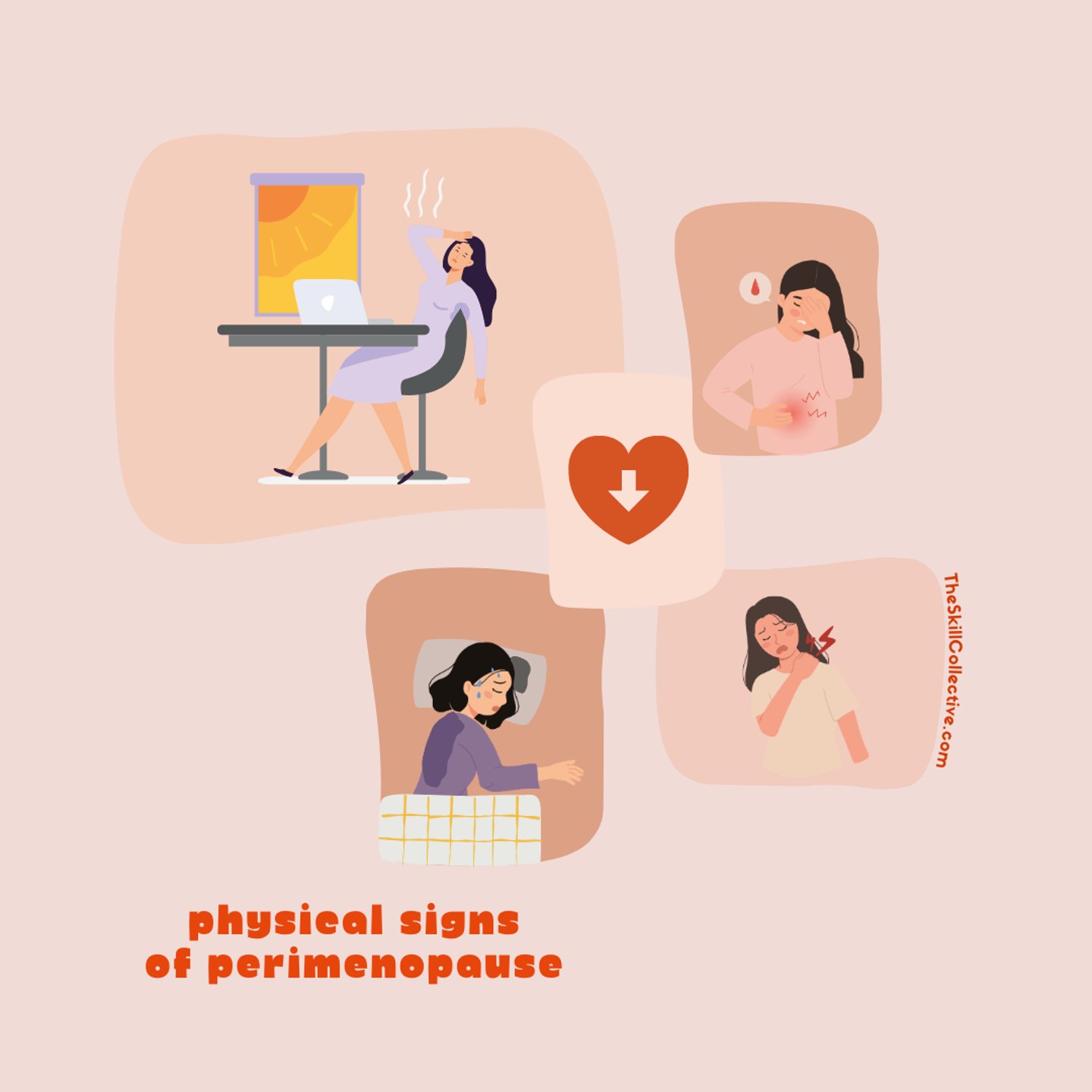
Hot flashes and night sweats are another symptom, where suddenly, her body feels warm, her skin turns red, and sweating disrupts her sleep.
She might wake up with a pounding headache, with no explanation.
We blame it on too much screen time or reading the Quran too long. But for her, this could be another symptom.
My father prefers the windows bolted shut.
My mother prefers the windows wide open so the room isn’t so stuffy. Closed spaces make it hard for her to breathe.
She can no longer wear clothes with the neckline too close to her neck.
What is this?
Another symptom: shortness of breath or chest tightness.
The External Changes
These were all the internal changes that a woman carries inside her body.
Now let’s look at the external changes, the ones that can affect her confidence, her day-to-day functioning, and interactions with others.
Someone’s weight is a widely discussed subject in our Pakistani society:
“Tum to hanger ki tarhan hogaye ho.”
“Hawa khaati ho khanay mai?”
“Lagta hai university mai khub khaana peena outing hoti hai.”
For a woman, her weight and her physical appearance are given more weight than her brain or creativity.
When a woman in her late 30s or 40s starts gaining weight, people are quick to point out that, at this age, shedding weight can be hard.
It’s one thing to show concern, but another when comments are made in public, breaking her confidence when she is already experiencing mood swings as a symptom.
Many women are working hard to take care of their bodies, eating right, exercising, and walking daily, even if it doesn’t show on the outside.
The Hair Story
Another significant investment, both monetary and emotional, is the time women spend throughout their lives caring for their hair.
You’ve heard it: when a woman transforms, her glow-up shows through her hair.
But what if there’s a change that isn’t a glow-up?
Another symptom is hair loss.
For women in later life, this means loss of volume, dry skin, and the need to take extra care of their hair and bodies.
It’s extra work on top of an already demanding life.
On top of that, perimenopause brings muscle and joint pain, which can disrupt her daily routine.
She might silently push herself to show up for you every day, making sure your meals are warm and ready, your rooms are clean, and your life keeps going.
Imagine the mental toll on her.
Let’s Talk About Her Mental State
Let’s just talk about the woman, only for some time.
She hasn’t slept due to muscle or joint pain.
She wakes up with a pounding headache.
Every task she tries to do, she can’t stop sweating from head to toe.
She keeps forgetting what was decided for dinner. She’s slowly getting irritated. She forgets what time everyone will be back. Her tasks are unfulfilled, and she’s overwhelmed now.
She had to give herself some time today, but she had to be with her family instead.
This might not be your mother's or your aunt’s everyday life, but imagine being in her shoes.
How does it feel to come face-to-face with so many new challenges, all alone?
No one understands why she’s raising her voice.
No one stops to ask why she gets defensive so easily.
It’s easy to call these excuses, but no woman finds pride in delayed tasks, poor performance, or seeming non-committed.
In a society that pressures women to perform at every stage of their lives, this stage is particularly the most dangerous, along with motherhood.
Why We Don’t Talk About It
Topics concerning birth and periods must only be talked about in female-only spaces.
But this is where we are wrong.
While it’s true that young girls in our society feel comfortable discussing these subjects with female family members or teachers, discussions must extend beyond female-only groups.
Topics concerning periods are about a woman’s bodily experience and her health.
If we don’t concern ourselves with them, the consequences of being misinformed will affect not just women, but also our relationships with them.
What the Research Says
I came across a study from Karachi that really caught my attention.
It was conducted at the Department of Obstetrics and Gynaecology at Karachi Metropolitan University, a six-month research project from January to June 2023.
It looked at something we rarely talk about: how menopause affects a woman’s psychological well-being.
They reached out to 184 women between 45 and 60, women who were perimenopausal, menopausal, or postmenopausal.
Each participant was given a questionnaire in a quiet space to understand emotional and mental health: anxiety, depression, and stress.
And the results were sobering.
Anxiety was the most common struggle. Women scored around 14 on the anxiety scale, describing restlessness, worry, or unease. Depression followed closely behind. Stress was slightly lower, but still constant.
What stood out: menopause itself was statistically linked to higher anxiety and depression.
Think about that, a phase that’s supposed to mark wisdom and freedom is instead becoming a time of mental struggle.
Most participants lived in nuclear families. Most were educated, working women — and yet, many were quietly fighting battles with their own minds.
Menopause correlated positively with all three: anxiety, depression, and stress.
Meaning, as the body changes, the mind carries more weight too.
Menopause isn’t just a medical milestone; it’s an emotional one.
Another Study, and Another Truth
Another study, this time from Peshawar, explored what women go through — not just physically, but emotionally and socially.
Five hundred women participated in the Postgraduate Medical Institute in Hayatabad. Half were perimenopausal, half postmenopausal.
Nearly 71% had no formal education. Almost 40% came from lower-income backgrounds. Education and class shape how we understand and survive transitions like menopause.
The symptoms were familiar: hot flushes, palpitations, headaches, irritability, forgetfulness, loss of libido, and constant fatigue.
Interestingly, 76% of postmenopausal women said they considered it a natural part of ageing, not an illness.
But others, especially those still going through it, felt fear, about their bones, eyesight, or sense of femininity.
That fear of ageing, of losing youth, runs deep. And it’s not just hormonal. It’s cultural.
Many women reported irritability, but when researchers looked more closely, it wasn’t just about hormones.
It was about life: midlife stress, growing children, financial pressure, and ageing parents.
These weren’t clinical symptoms, these were stories of women carrying the weight of entire households.
Closing Thoughts
So when we talk about mood swings or irritability, maybe we shouldn’t rush to call it a hormonal imbalance.
Maybe it’s exhaustion.
Maybe it’s the quiet accumulation of years of responsibility, finally showing itself.
And yet, what’s beautiful and quietly powerful about this study is how many women accepted menopause with grace.
For them, it wasn’t an ending, it was a transition.
A moment to step into a new kind of self, calmer, more certain.
If you’re just beginning your journey of understanding the women in your life better, I want to congratulate you.
Because awareness is the first act of love.
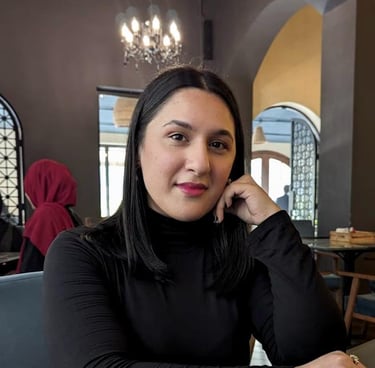
Sarosh Ibrahim
Researcher
Oct 28, 2025
© 2025. All rights reserved.
A platform exploring body politics, culture, and identity in Pakistan and beyond.