The Politics of the Dupatta
The dupatta is more than fabric. It’s history, expectation, autonomy, and the space where culture meets the female body.
A few weeks ago, at a Dior event in Los Angeles, Kendall Jenner walked into a room wearing a black outfit with a long, sheer scarf draped around her shoulders. Fashion magazines described it as elegant, minimal, very Dior. Just a soft piece of fabric, styled effortlessly, moving as she walked.
Timeless.
When I saw that image, I kept thinking about something very simple:
When did the dupatta become luxury fashion?
Why does the same piece of cloth feel so different depending on who is wearing it?
For many of us, the dupatta was never just styling. Growing up, a dupatta slipping off your head could mean disrespect. Wearing it differently could mean you were “changing.” Not wearing it at all could lead to judgment before you even spoke. Yet, on that runway, it was just fashion, admired, unjudged, elevated.
This contrast is stark. On some bodies, the dupatta is aesthetic. On others, it carries expectations.
That is where the politics of the dupatta begins.
A Historical Lens
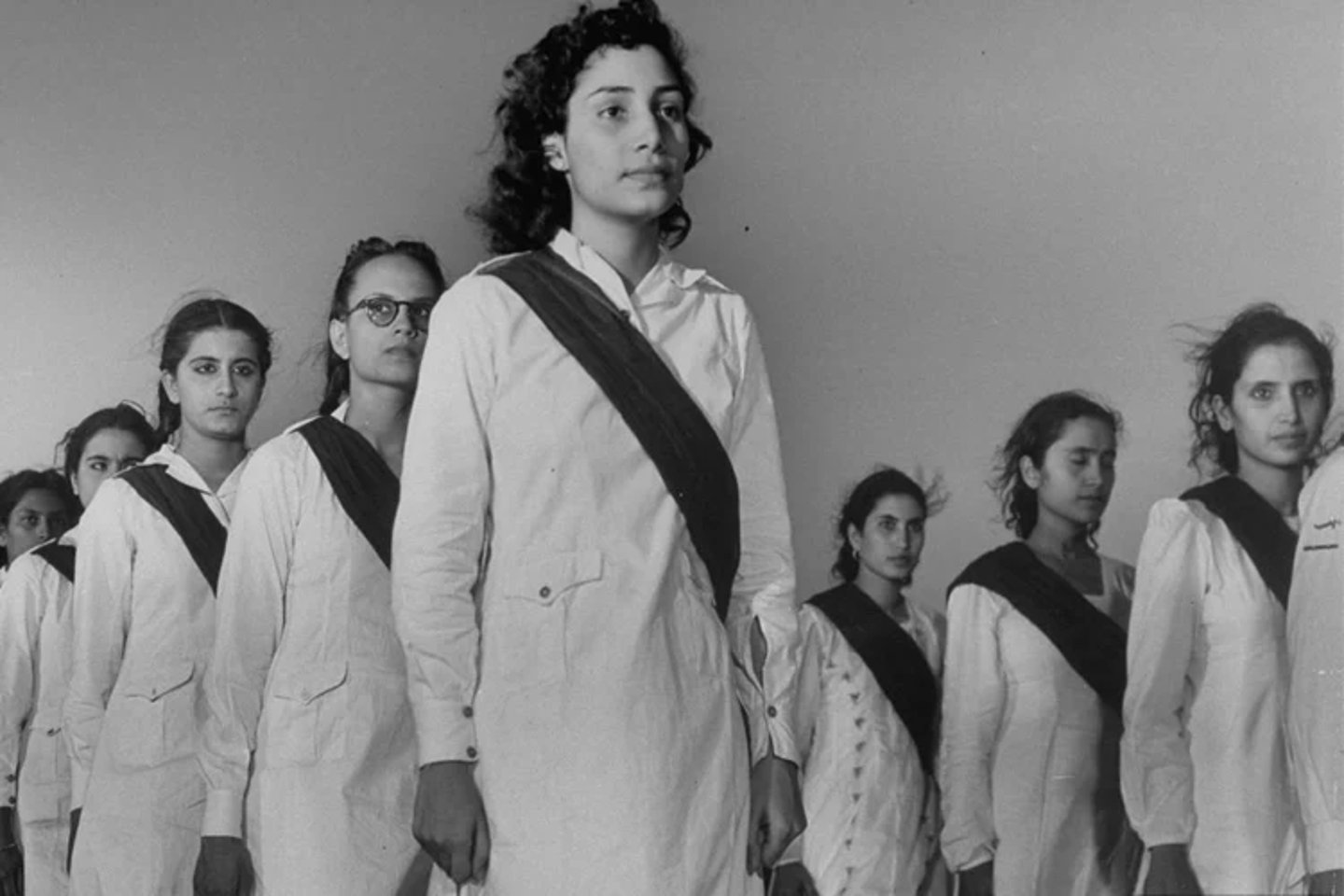
The female body has long been a canvas for culture in South Asia. Mughal queens, depicted in miniature paintings, were adorned in jewels from head to toe.
These ornaments were not just beauty.
They signaled status, power, belonging. Everyday clothing worked the same way. The dupatta, originally versatile and functional, gradually became a marker of modesty.
Modesty became something to judge.
When clothing and adornment signal identity, they carry responsibility. Not personal choice alone, but the weight of representing family, culture, and morality. That responsibility often lands on women. From jewellery to footwear, the female body becomes a place where culture is visible, and policed.


Sarosh Ibrahim
Researcher
March 17, 2026
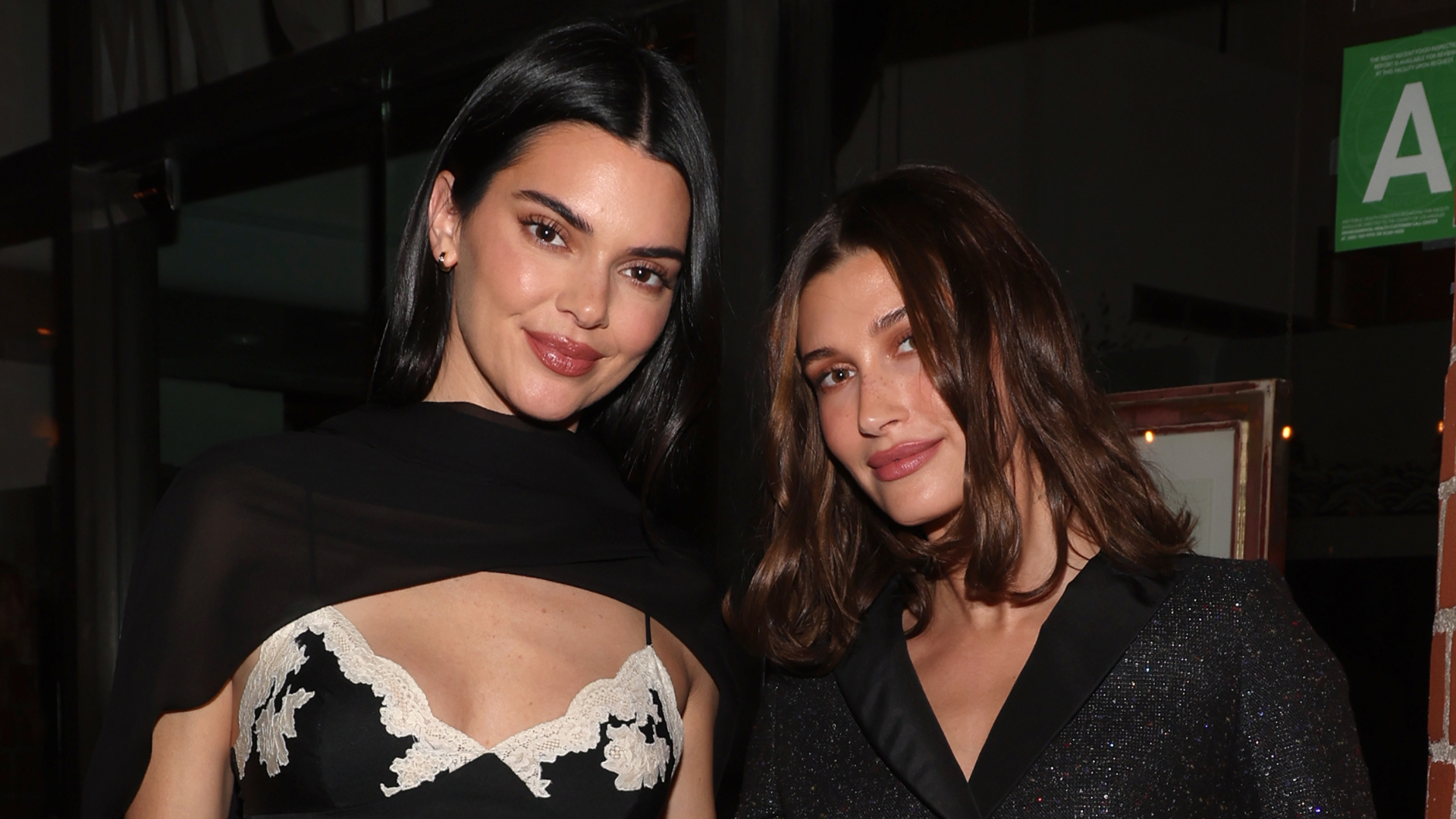
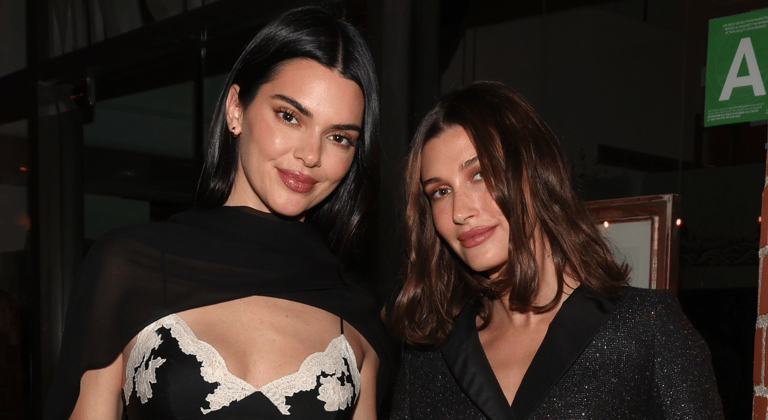
Kendall Jenner and Hailey Bieber both wore Dior to W Magazine's pre-Oscars party | Photo Courtesy: GETTY Images
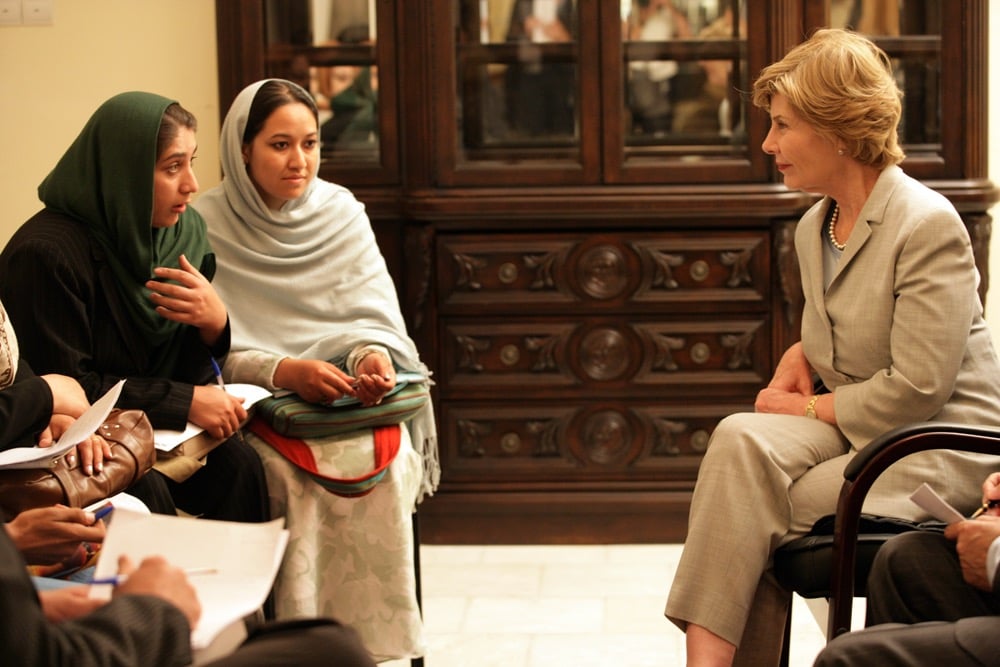
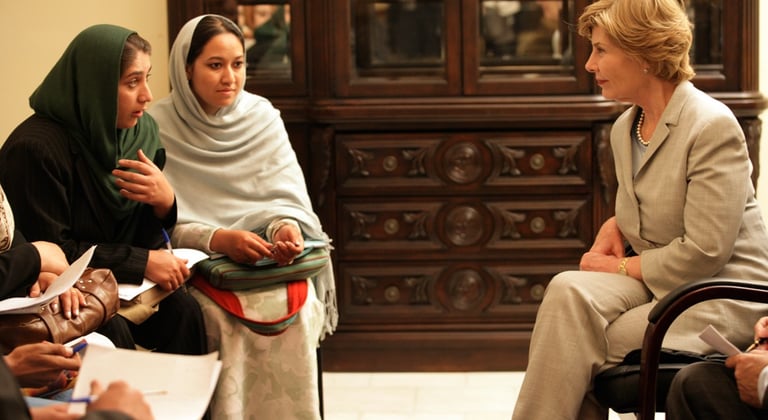
Laura Bush, former First Lady of the United States, a prominent advocate for Afghan women's rights and education since 2001 | Photo Courtesy: George W. Bush Presidential Centre
George W. Bush Presidential Centre
From Tradition to Global Fashion
Today, South Asian aesthetics are everywhere.
Dupattas become scarves.
Jhumkas become statement earrings.
Ghagra silhouettes inspire summer skirts.
Luxury brands celebrate craftsmanship and heritage, but the conversation changes when the same objects appear at home: suddenly it’s about modesty, respectability, morality.
When a dupatta or scarf appears on a runway in Paris or New York, it is praised as heritage, elegance, exotic beauty. But when women in Muslim societies cover their heads or bodies out of faith, identity, or personal choice, Western media and political discourse often interpret it as oppression, as if covering oneself can only ever be a sign of subjugation.
Anthropologists like Lila Abu‑Lughod have critiqued this impulse, arguing that Western narratives reduce Muslim women’s lives to a single story, the “oppressed woman” who needs to be saved, while ignoring the diversity of meanings and agency that women themselves bring to these practices.
During the War on Terror, for example, images of veiled Afghan women were used to justify military intervention, framed as symbols of backwardness that needed “liberation,” without actually listening to Afghan women’s own voices or desires.
This contradiction cuts to the heart of our paradox:
Culture travels freely as an aesthetic, but the women whose bodies bear that culture do not.
Fashion is never just about clothes; it is about power, history, and who gets to define what is acceptable. The female body remains the canvas where these meanings are displayed and contested.
Body Politics: The Everyday Reality
Most women in Pakistan can recall moments of correction: “Fix your dupatta. Sit properly. Don’t post that online.” Instructions are rarely explained. They assume the female body is not her own but represents something larger: family, culture, religion, honour.
Moral policing, both subtle and explicit, shapes behavior. School textbooks, workplace expectations, public harassment, online scrutiny, all teach women that visibility carries judgment. The female body is constantly read and measured against standards of decency, tradition, and respectability.
Even when women embrace tradition proudly, the objects themselves can feel like proof: proof of morality, proof of respect, proof of family honour.
When proof becomes pressure, the politics of clothing begins.
The Paradox of the Dupatta
In Pakistan, a dupatta, hijab, or headscarf can mean identity, modesty, faith, but also control. Studies show women navigate overlapping pressures: moral expectations from family, internalized beliefs about modesty, and the practical effects of visibility in public spaces.
Globally, the same cultural elements travel freely: admired in magazines, runway shows, and luxury campaigns. Locally, the same symbols can be moral tests. The paradox is clear: culture travels, but the freedom of those carrying it often does not.
Honour, respectability, and morality are measured on the female body.
This paradox is the intellectual heart of the conversation.
The dupatta tells a story, not just of cloth, but of control, identity, and who gets to define meaning.
Reflection: Reclaiming the Fabric
I remember being ten or eleven, on a simple trip to the mall, my body just beginning to grow, and not realizing it needed hiding. A scarf tucked tightly across my chest became a lesson: a woman’s body had to be contained, protected.
The dupatta, once a fashion statement, became a symbol of control.
Over the years, that same scarf carried heavier weight. It was beautiful, yet entangled with expectations. It travels freely across runways and Instagram feeds, but the women who wear it in Pakistan often do not.
Regardless, reclaiming the dupatta is possible. Wearing it, choosing it, reshaping its meaning, this is where culture meets agency.
It can be beauty.
It can be rebellion.
It can be choice.
The politics of the body do not exist in isolation, they live in every gesture, every negotiation between tradition and autonomy.
Perhaps the only freedom worth striving for is the freedom to carry it on your own terms, in your own way. The dupatta travels, but the women who wear it continue to navigate its weight.
That is why talking about it matters. Not just for fashion, but for understanding the complex intersection of culture, identity, and autonomy.
© 2025. All rights reserved.
A platform exploring body politics, culture, and identity in Pakistan and beyond.