Smog and the Unspoken Health Crisis of Lahore
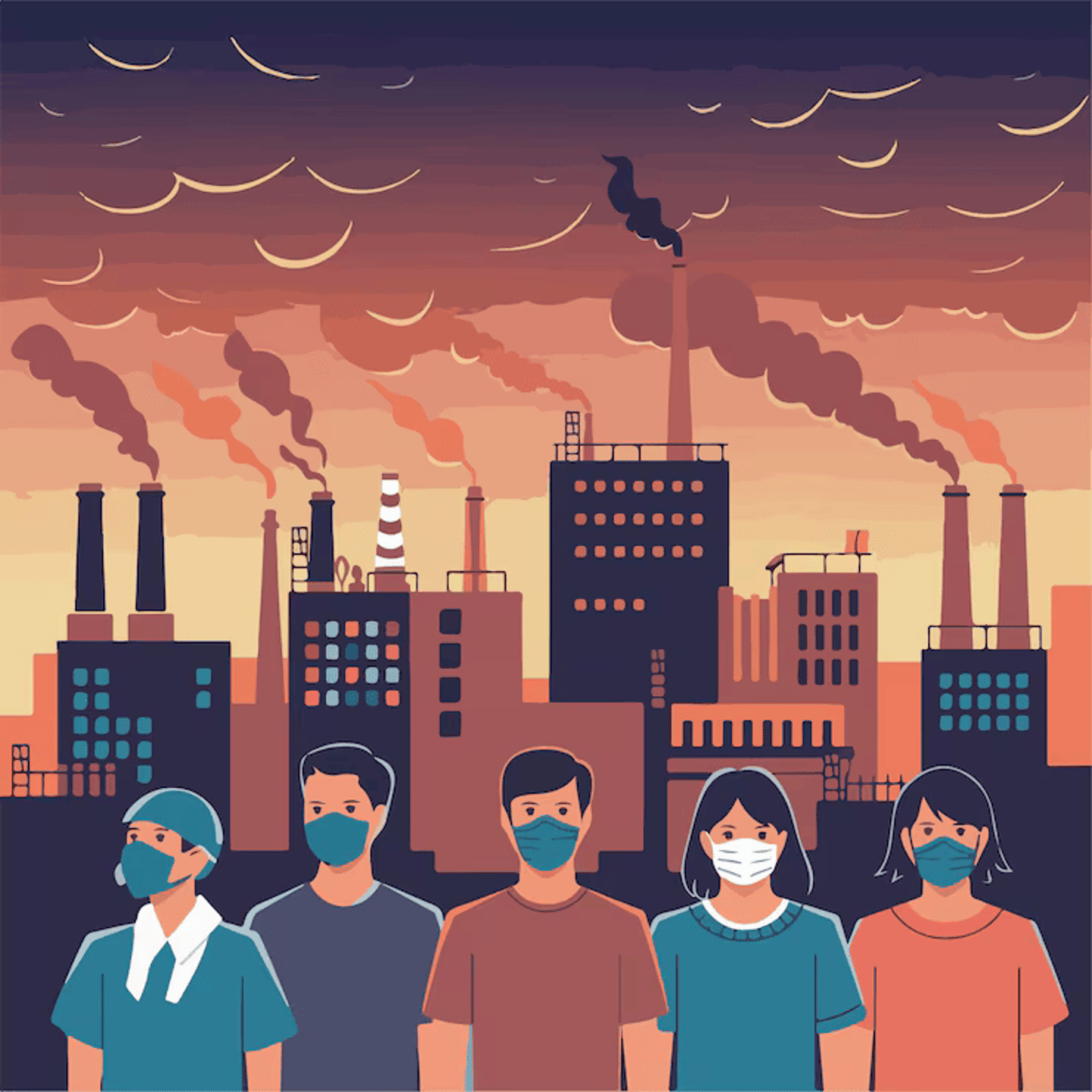
In Lahore, the toxic air arrives before the news.
You can taste it before the weather app updates, whether it’s the faint sting in your throat, a heaviness in your chest, or the slow realization that the season of suffocation has begun again.
Every year, as the nights turn cooler, the city turns grey. Streets that once echoed with late-night laughter and the rustle of trees now stand still under a thick, yellow haze. This isn’t the Lahore our poets wrote about. This is a city where breathing has become calculated.
As citizens across Punjab brace for yet another smog season, the conversations sound hauntingly familiar. There is frustration, fatigue, and a growing understanding that this isn’t just an environmental crisis, it’s a national health crisis.
“I Plan My Life Around Air”
For Mehr Chaudhary, 28, a resident of Lahore, life during smog season is like a self-imposed lockdown.
“Ever since the smog season started, I’ve had trouble breathing,” she told me. “I’m nebulized almost every day. I can’t step out without a mask. I even check the AQI before going to buy groceries.”
Mehr describes the way her body reacts like muscle memory.
“There’s a tingling in my nose, irritation in my throat. Even if the weather is warm, it feels like I’m breathing in winter. During this season, breathing takes ten seconds instead of two.”
She laughs softly, a mix of exhaustion and irony.
“I’ve stopped fighting it. I fall sick every year. I take medicine. But I don’t think I’m surviving. It’s submission.”
“We Don’t Breathe the Same Air”
Hashid Sarfraz, a 31-year-old architect, calls it social injustice.
“Staying indoors is my only refuge,” he says. “I used to love walking through green spaces, but now I can’t. The air that once healed me now hurts me.”
Hashid works as a Program Manager in Urban Planning and Architecture. His words carry both personal pain and professional insight.
“Our buildings are not insulated. There’s air leakage everywhere. You can’t seal your house from it. The same toxic air seeps into everything.”
He believes the divide in Lahore is not just economic, it’s atmospheric.
“The rich can buy air purifiers, double masks, and escapes to the north. But the labourers, the traffic police, sanitation workers, they have no protection. The air itself has become a class issue.”
“Smog Has Made Us a Defeatist Citizenry”
Arslan, who suffers from an autoimmune condition, says his body senses the smog’s return before any AQI reading does.
“My throat hurts, my body aches. It’s not just physical, it’s psychological. We’ve come to accept it, that’s the most dangerous part.”
He pauses.
“We haven’t learned to live with it; we’ve accepted defeat. That’s who we are now, a defeatist citizenry.”
Arslan describes his family’s adaptation with irony:
“Haldi doodh and antihistamines, that’s our survival plan. Air purifiers are expensive, and they add to your bills. So we’ve normalized the suffocation instead.”
He sees smog as both a symptom and a symbol.
“Smog is the by-product of greed, capital, and complacency. The air has become an economic good, something you need privilege to access. When you think about it, that’s dystopian. Breathing shouldn’t be a luxury.”
“Our Constitution Promises Clean Air”
For Abdul Waris Hameed, 29, an academic and coordinator for the Lahore Academic Alliance for Climate Action (LAACA), the smog crisis is more than an annual inconvenience — it’s a constitutional failure.
“Our constitution promises us clean air, but it has become a privilege,” he says. “Sanitation workers, traffic police, labourers, they’re the most exposed and the least protected.”
At his university, Abdul runs an air quality monitoring network. The data, he says, is relentless.
“Even outside of smog season, the air is unhealthy all year round. It’s not seasonal; it’s structural. It’s political.”
He believes the city’s governance has failed to evolve.
“Before any government project is approved, its environmental cost should be made public — in Urdu and English — and shared across Pakistan. We have a right to know how destructive our development projects are.”
“I love Lahore,” he adds, “but this is the only time of year I think about leaving. It’s the city of gardens, and it’s become unbreathable.”
“We Are All Responsible, Just Unequally”
“We’re all responsible,” says Saba Tariq, 24, an environmentalist. “Citizens refuse to change habits, industries disregard standards, and the government lacks both vision and will.”
She describes the haze as both literal and moral.
“Every year, we talk about smog, but not about accountability. People complain, yet they keep driving, keep burning waste, keep pretending it’s someone else’s problem.”
Her family’s struggle is deeply personal.
“My grandfather and aunt both have asthma. Every winter, they struggle to breathe. Even with a mask on, I feel the smog entering my lungs. The thought of breathing toxic air every day is terrifying.”
She pauses.
“Maybe as citizens we’ve learned to live with it. But as environmentalists, we shouldn’t.”
The Geography of Inequality
The geography of Lahore tells the story of inequality better than any policy report.
In elite neighbourhoods like Gulberg or DHA, air purifiers hum in bedrooms and offices. Anti-smog guns spray boulevards clean before morning traffic begins. But just a few miles away, in industrial zones, the same haze hangs heavy, unfiltered, unacknowledged.
“Anti-smog guns were first used in elite areas,” Mehr points out. “Why there? Why not where it’s actually needed, the industrial zones, the low-income neighbourhoods?”
It’s a fair question. Because when the state deploys its limited interventions where the privileged live, clean air becomes not a right, but a reward.
Hashid calls it environmental apartheid:
“When one neighbourhood gets smog guns and another gets silence, that’s not just inequality. That’s segregation through air.”
Looking at Air as a Mirror
This crisis reveals what kind of society Pakistan has become.
We’ve learned to survive, not to change. We buy purifiers instead of demanding a policy. We wear masks instead of reforming industries. We scroll past AQI charts the way we scroll past tragedy, momentary outrage, followed by silence.
In a way, smog is a mirror. It reflects back our collective indifference, our class divides, our quiet surrender.
“Smog is a by-product of greed,” says Arslan. “The haze in Lahore is just the visible form of our choices, our silence, our convenience.”
The Slow Violence of Air
Environmental scholars call it slow violence, destruction that unfolds gradually and invisibly, yet devastates lives all the same.
Lahore’s smog is exactly that.
It doesn’t destroy in a moment. It erodes, one lung, one breath, one childhood at a time.
You don’t flee it. You inhale it.
And that’s what makes it cruel: even survival feels complicit.
“Air Purifiers Won’t Save You”
Every conversation returns to one shared truth: no matter how privileged you are, there’s no escape.
“No matter how powerful you are, you’re breathing the same air,” says Abdul. “Air purifiers won’t save you.”
“We think our class can protect us,” adds Arslan, “but air doesn’t discriminate. It just kills slower for some.”
“Your money won’t save you,” Bilal says. “This poison will engulf you too.”
They aren’t exaggerating. Lahore’s AQI often surpasses 400, levels deemed hazardous by WHO standards. Schools close, hospitals fill, and the government issues perfunctory statements about “temporary visibility issues.”
But visibility is the point. Smog makes visible everything Pakistan prefers to ignore, governance failure, inequality, denial.
The City That Can’t Breathe
Lahore has always prided itself on being the zinda dil city, the city of life. But as the air thickens, even that spirit feels smothered.
People still find small ways to cope: planting air-purifying plants, sharing masks, checking on each other. There’s resilience, but it feels like resistance against inevitability.
“I plan my life around air,” says Mehr.
That line stays with you. Because in Lahore today, life itself has become a privilege measured in breaths.
A Future on Hold
None of the citizens I spoke to expressed real hope.
“I have no real hope,” says Abdul. “I work with numbers every day, and the numbers tell me we’re doomed.”
“I can’t imagine raising children here,” says Hashid. “I can’t wrap my head around my offspring having to survive in this.”
“Wake up before it’s too late,” Bilal warns. “This poison will engulf you too.”
And yet, even amid despair, there’s something defiant in the act of speaking, of naming the suffocation, of refusing to normalize it.
If the Air Could Speak
If Lahore’s air could speak, what would it say?
“Control this urbanization stress on me,” says Hashid.
“Run,” jokes Bilal, darkly.
“It would scream at us,” says Arslan.
Maybe it would remind us of what we’ve forgotten, that clean air isn’t a privilege. It's right.
And until we begin to treat it as one, Lahore will remain what it has quietly become:
a city gasping for survival, one breath at a time.


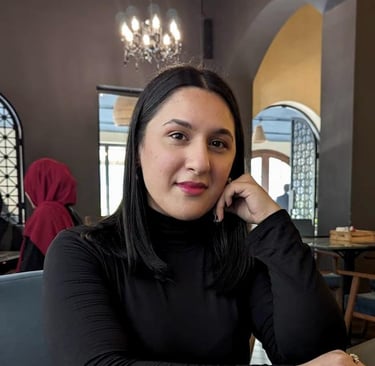
Sarosh Ibrahim
Researcher
Nov 04, 2025
© 2025. All rights reserved.
A platform exploring body politics, culture, and identity in Pakistan and beyond.