
Margot Robbie, the Taj Mahal Diamond, and the Erasure of Noor Jahan
How a Mughal heirloom became a Hollywood spectacle, and what it reveals about history, power, and recognition.


When Jewelry Becomes the Story
Actor Margot Robbie, whom many of us last saw on screen in Barbie, recently appeared at the premiere of her new movie Wuthering Heights in Los Angeles. While the media buzzed over her fashion choices, it wasn’t her gown that caught attention online—it was her jewelry.
Robbie wore the legendary Taj Mahal Diamond necklace, and in interviews, she mentioned that it once belonged to Elizabeth Taylor, a gift from her husband Richard Burton. That statement, brief as it was, sparked fascination—but the deeper story is far richer.
The Journey of a Mughal Heirloom
The Taj Mahal Diamond is a heart-shaped pendant with an inscription in Farsi: “Love is Everlasting.” It originally belonged to Empress Noor Jahan, gifted to her by her husband, Mughal Emperor Shah Jahan’s father, Jahangir. This was not merely decoration—it was a symbol of devotion, power, and authority.




Sarosh Ibrahim
Researcher
Feb 18, 2026
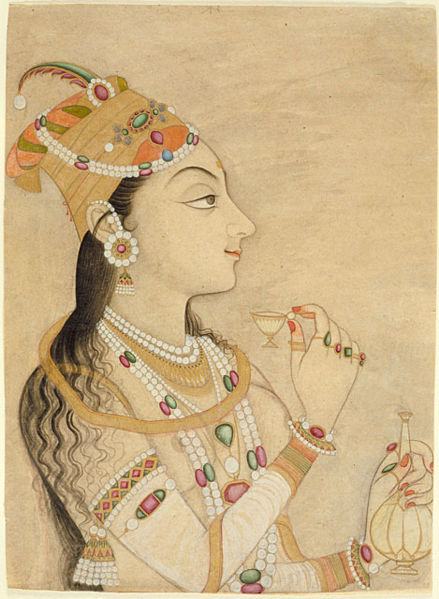
Nur Jahan born Mehr-un-Nissa, was the twentieth wife and chief consort of the Mughal emperor Jahangir.
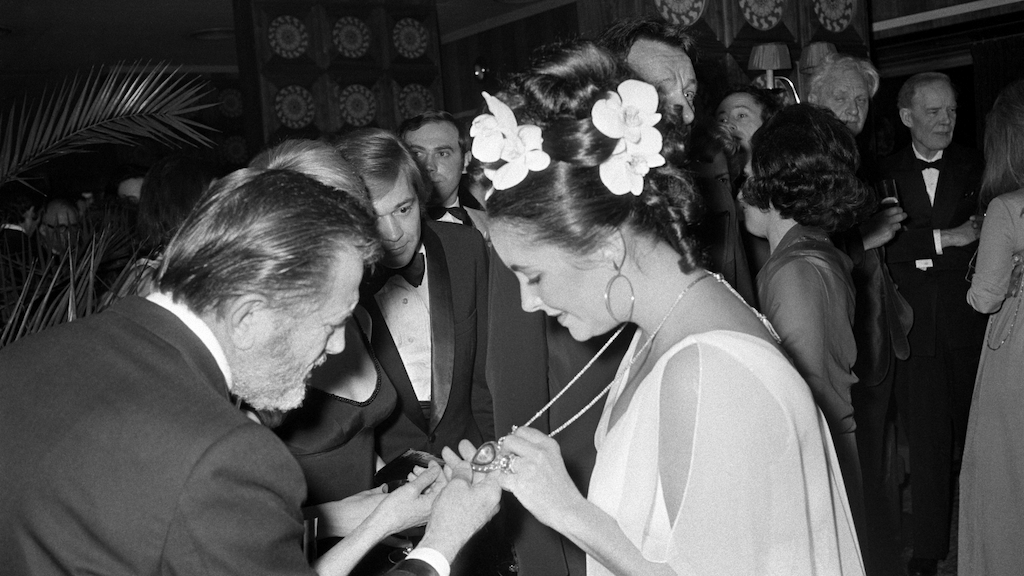
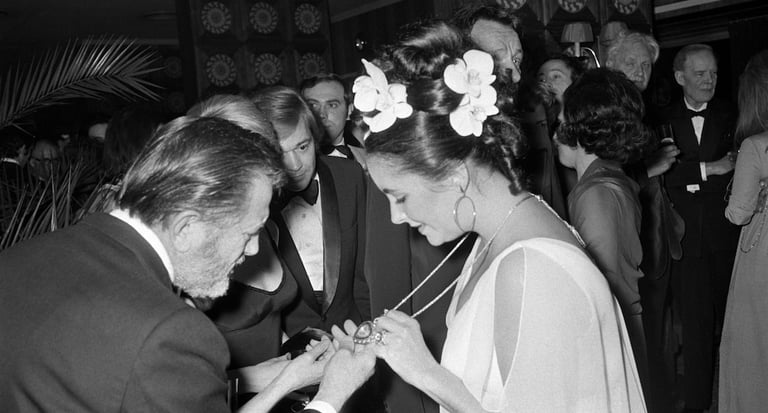
In honor of her 40th birthday, Richard Burton gifted Elizabeth the coveted Taj Mahal necklace.
The Politics of Naming and Recognition
This omission is not accidental. It reflects a systemic pattern of erasure that South Asian women, in particular, continue to experience in global narratives. As scholar Gayatri Chakravorty Spivak explains, colonialism was not just about conquest—it was also about reshaping knowledge. It determined who would be visible as a subject, whose voice would count, and whose existence could be erased.
Noor Jahan, as a powerful empress, patron, and decision-maker, is reduced in these narratives to the background. Her agency—the fact that she commissioned, governed, and shaped taste—is ignored. Meanwhile, Western figures like Elizabeth Taylor are positioned as the legitimate reference point for history, narrative, and beauty.
Colonial Continuities in Global Culture
Homi Bhabha’s concept of mimicry helps explain this phenomenon. Objects and symbols from colonized societies—like the Taj Mahal Diamond—appear in Western contexts almost intact, but stripped of their original authority. They are legible and admired, but only through a Western lens.
The necklace survives, but Noor Jahan does not. She exists in the background, her influence erased, while Western ownership and celebrity validate the narrative. Every time the necklace is described without her name, the absence is reproduced, normalized, and rendered invisible.
Why This Matters
This is not about Margot Robbie or Hollywood alone. It is about how global culture continues to manage meaning, authority, and recognition. The Taj Mahal Diamond becomes wearable history only when stripped of the sovereignty of its creator. By centering Elizabeth Taylor and sidelining Noor Jahan, a centuries-old pattern repeats: South Asian women are acknowledged as sources, not as subjects with agency.
Recovering Noor Jahan’s presence is not sentimental—it is political. It challenges the dominant hierarchy of recognition, forces a reconsideration of history, and highlights how colonial habits of erasure persist in subtle, polished forms today.
Conclusion: From Ornament to Evidence
The next time a Mughal heirloom appears on a global red carpet, remember this: beauty and glamour are never neutral. Objects travel, yes—but their histories, their political weight, and their creators’ authority are constantly negotiated.
Restoring Noor Jahan’s name to the narrative transforms the Taj Mahal Diamond from a mere fashion statement into evidence of empire, erasure, and the politics of representation.
This is not nostalgia—it is accountability. It is the work of seeing history for what it really is, rather than what dominant culture tells us it should be.
The necklace traveled through centuries, reaching Shah Jahan, who gave it to his wife Mumtaz Mahal. Following her death, Shah Jahan commissioned the Taj Mahal mausoleum, inspiring the diamond’s name. Centuries later, Cartier acquired the piece, redesigning its cord into a gold, ruby, and diamond chain with tassels.
In 1972, Cartier presented the necklace to Richard Burton as a Valentine’s and birthday gift for Elizabeth Taylor during her 40th birthday celebrations in Budapest. It became a statement of their intense, legendary romance. In December 2011, Taylor’s estate sold the necklace for $8.8 million, setting a record for Indian jewelry.
Now, decades later, the Taj Mahal Diamond has resurfaced in public—worn by Margot Robbie on a red carpet in 2026. Yet, in mainstream discourse, the necklace is still associated with Elizabeth Taylor, while Noor Jahan’s name is largely absent.
© 2025. All rights reserved.


A platform exploring body politics, culture, and identity in Pakistan and beyond.